
Polytheism and the Divine Pantheon
Course V of the Certified Godhunter Series
Welcome to Polytheism: The Divine Pantheon. This course investigates systems where “God” is not a single, all-encompassing being, but a category of multiple, distinctive divine entities. Unlike monotheism, which centralizes power, polytheism distributes it across domains like war, love, thunder, and harvest. Students will explore the major pantheons of Greece, Rome, Japan (Shinto), and Scandinavia (Norse), analyzing how divine hierarchies mirror human social structures and why ancient worship was often transactional rather than transformational.
Each of our courses is divided into 10 classes corresponding to the 10 chapters of the textbook assigned to the course. Each class has four essay questions.
Take This Course All Fourteen Courses
Meet Your AI Tutor: Prof. Dr. Nemo LXON
Your 24/7 Socratic Guide Through the Crucible
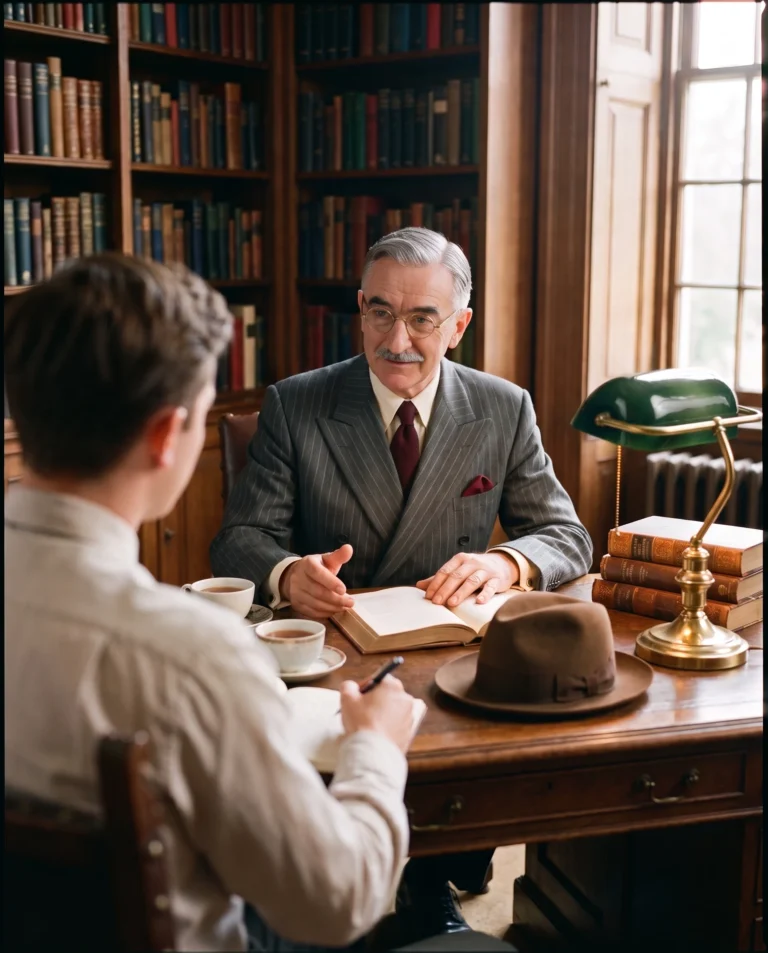
The Godhunter Academy does not simply feed you information; we demand that you defend it. To aid you in this rigorous pursuit, you will be guided by Prof. Dr. Nemo LXON—a proprietary, highly advanced AI theological tutor.
Programmed with a library of classical apologetics, historical data, and philosophical frameworks, Professor Nemo is not a passive search engine. He is a tireless sparring partner embedded directly into this syllabus, ready to challenge your premises, refine your arguments, and forge you into a Certified Godhunter.
Polytheism: The Divine Pantheon: The 10-Class Syllabus
Chapter 1 Defining Polytheism
God is a category of multiple, distinctive divine entities. We explore divinity as a community rather than a singularity, the gods as distinct persons with names, genealogies and wills of their own, the limits on even the King of the Gods, and the difference between “hard” and “soft” polytheism.
Chapter 2 The Nature of the Pantheon
Each god has specific powers and domains. We examine the division of labor in the cosmos, the divine hierarchy of fathers, mothers, children and servants that mirrors human society, the gods’ marriages, quarrels and alliances, and the Divine Council that decides the fate of humanity.
Chapter 3 Location and Geography
Polytheistic gods have addresses. We study the sacred mountains where the high gods dwell, the genius loci or spirit of a spring, grove or city, and the temple as the literal house of the god, with its rituals of feeding, clothing and waking the deity.
Chapter 4 Divine Temperament
The gods frequently have human-like temperaments: joy, anger, jealousy and grief. We explore divine caprice, worship as a transaction (do ut des, “I give so that you may give”), and whether gods who commit acts that would be crimes for humans can be called good.
Chapter 5 Ancient Greek and Roman Gods
We survey the twelve Olympians, how Rome adopted and adapted the Greek deities, the hero cults that blurred the line between god and man, and polytheism as a civic duty in which denying the gods was treason against the state.
Chapter 6 Shinto (The Way of the Gods)
We explore the indigenous polytheism of Japan: the Kami, purity and pollution and the rituals of purification, Amaterasu the Sun Goddess and her connection to the Imperial family, and Shinto’s reverence for a land inhabited by divine presence.
Chapter 7 Odin and Norse Gods
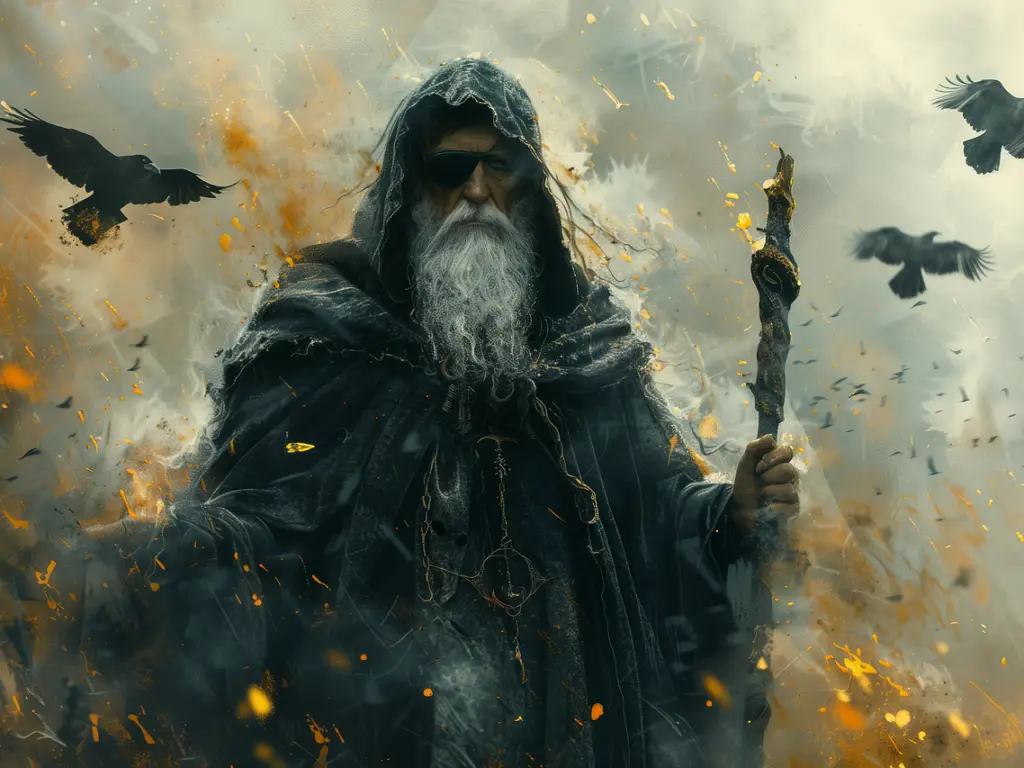
We travel north to the Aesir and the Vanir, profile Odin the Allfather, who gave his eye for knowledge, contrast Thor the protector with Loki the trickster, and study Ragnarok, the final battle in which the gods themselves will fall.
Chapter 8 Polytheism vs. Henotheism
Worship of many versus worship of one supreme being. We clarify the boundary between the two, contrast polytheism’s tolerance with henotheism’s exclusivity, and see how a polytheist may act like a henotheist during a single festival.
Chapter 9 From Animism to Polytheism
We trace the development of polytheism out of animism: how the spirit of the thunder became Thor, how a more complex civilization produced a more specialized pantheon, and whether some gods began as human ancestors deified over time.
Chapter 10 Structures and Cultural Influence
We analyze how the pantheon reinforces the structure of society, the legacy of the gods in art and literature, and the modern revival of the old gods, and close with a question: does the world feel more like a monarchy run by one God, or a committee run by many?
Test Your Investigative Instincts
Before you commit to studying Polytheism, test your current reasoning against the Academy’s curriculum.
1. The Definitional Question: What is the difference between “hard” and “soft” polytheism? (Answer Hint: In hard polytheism the gods are distinct, separate beings; in soft polytheism they are different faces or masks of a single underlying reality.)
2. The Transactional Question: What does the Latin phrase do ut des reveal about worship in many polytheistic systems? (Answer Hint: “I give so that you may give.” Worship keeps a good relationship with a powerful neighbor through offerings, rather than seeking moral transformation.)
3. The Comparison Question: How does polytheism differ from henotheism? (Answer Hint: Polytheism worships many gods freely and can always add another to the altar; henotheism acknowledges many gods but focuses worship on one supreme god.)
Why did we use this image for this course?
Odin the Head of the Norse Pantheon Most mythological stories about Odin survive from the 13th-century Prose Edda and an earlier collection of Old Norse poems, the Poetic Edda, along with other Old Norse items like Ynglinga saga. The Prose Edda and other sources depict Odin as the head of the pantheon, sometimes called the Æsir, and bearing a spear and a ring. Wider sources depict Odin as the son of Bestla and Borr; brother to Vili and Vé; and husband to the goddess Frigg, with whom he fathered Baldr. Odin has many other sons, including Thor, whom he sired with the earth-goddess Jörð. He is sometimes accompanied by animal familiars, such as the ravens Huginn and Muninn and the wolves Geri and Freki. The Prose Edda describes Odin and his brothers’ creation of the world through slaying the primordial being Ymir, and his giving of life to the first humans, Ask and Embla. Odin is often referred to as long-bearded, sometimes as an old man, and also as possessing only one eye, having sacrificed the other for wisdom.