
Hunting for God?

You are one of the few. Most people spend their days on financial survival and the next meal. They do not have time to contemplate their place in the universe. You are here, so you are already doing something rare. You are thinking past your daily bread. This page was made for you.
More than two million books are published every year, about seven thousand a day, and no one can keep up. So we put off the questions that matter most. Someday we will learn the piano. Someday we will decide whether there is life after death, whether there is a final judgment, whether this life has a purpose, and why there is so much evil in the world. Someday has a way of not arriving. You have arrived instead.
What Are You Looking For?
You came here believing something. You may believe it with all your heart, or you may have doubts. Before you go further, take a moment to honestly admit to yourself why you came, if you have not already done so.
Some come because what they believed no longer satisfies, and they are looking for another answer. Some come because they believe and want to be sure; they want to know it stands up to examination. Some come simply to know what people have believed about God across the centuries, and why.
All three are welcome here, and each has a path. You do not have to tell us which one you are; nobody here is sorting anyone. And the three paths matter less than you might think, because they all lead to the same place: reading.
Do All Roads Lead to the Same Place?
You have probably heard, and perhaps said, that all religions are basically the same, that they all lead to the same place in the end. It is a generous thought, and it does not survive a look at what the religions say about themselves. Buddhism does not ask you to believe in a creator. Islam insists on one God who has no son. Hinduism is at home with many gods. Christianity says God became a man and died. None of these traditions thinks it is saying what the others say. To call them all the same is not respect; it is not listening.
Perhaps none of them has it right. But they cannot all be right at the same points, and they do not lead to the same place. For you, this is good news. If every road led to the same place, there would be nothing to hunt; you could take any road, or none, and arrive. The hunt is worth a person’s time because the differences are real.
To help you orient yourself, we have laid out the twelve major theories of God, from classical theism to atheism and agnosticism, each described fairly and none given the last word. Take a glance and see which one you stand closest to today. That is not a commitment. It is a compass reading, and it will help you find your way through everything else on this site.
The Twelve Major Theories of God
Mining for Wisdom
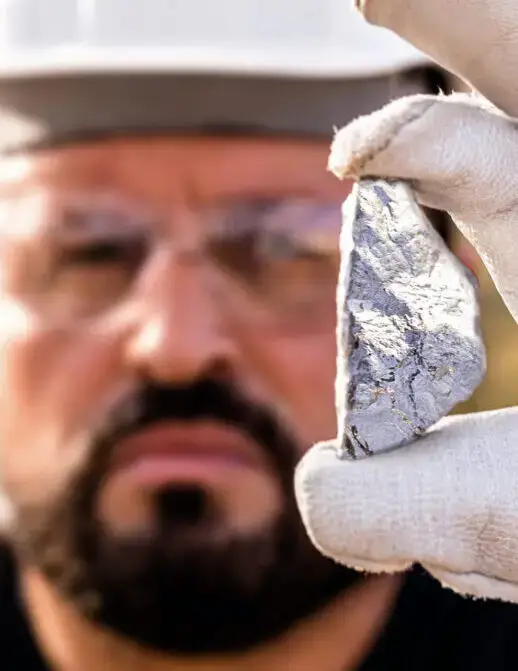
Proverbs says to seek wisdom as men seek silver and hunt for it as for hidden treasure, and then you will find the knowledge of God. The Bible chose mining as its picture of the search for God because a mine asks for diligence. Silver does not lie on the surface. It is found by people who go in, stay in, and keep digging.
Picture twelve miners in one dark mine, each with a lamp. The beams point in twelve directions and hardly cross. That is the state of the world’s beliefs about God. The only way to learn which vein carries silver is to go down and dig, and that is what this place is for.
The Bible distinguishes between the wisdom of man and the wisdom of God, and both of them speak in the language of the mine. Man’s wisdom, in the voice of an Athenian writing about the silver mines of his own day: “Bring as much labor as we can get into the mines and carry on work in them, feeling confident that the ore will never give out and that silver will never lose its value.”1 God’s wisdom: “Seek first the kingdom of God and his righteousness, and all these things will be added to you”; “You will seek me and find me when you seek me with all your heart.”2 The promise is this: “Draw near to God, and he will draw near to you.”3 And the charge: “Work hard to come near to God as a tested, reliable, and worthy person.”4 One mine pays in silver that is spent; the other pays in wisdom that is kept.

We built a city for finding answers and named it Solephia, from three old words: sol, light for the soul; aletheia, truth; sophia, wisdom. Its mine holds the original writings of the Christian centuries, republished and searchable, an AI research assistant known as Prof. Dr. Nemo LXON, who answers your questions and cites his sources, and an academy that teaches every one of the twelve theories, not only its own. The work is real work, and we pay for it: every hour you dig, attend class, and help build Solephia earns Solis, the currency of the city, which you spend on books, courses, and everything else inside.
Why a Shepherd?

Our front page shows a shepherd leading his flock up a mountain at night. Since God is unseen, the Bible speaks of him in pictures, and the shepherd is its oldest picture of a good leader: one who goes ahead, knows the way, and does not leave the flock to the dark. It was also the earliest picture Christians drew of Jesus; you can still see it on the walls of the Roman catacombs. For many people, the search for God is the search for a leader worth following. The mountain the shepherd climbs is the silver mine of Proverbs. The flock is anyone willing to make the climb.
Come and Dig
Hebrews says that those who diligently seek God receive their payment. Isaiah says the earth will one day be filled with the knowledge of God as the waters cover the sea. We would like to be part of that, and we would like you to be.
Membership is free. There is no credit card, no obligation, and a name of your choosing is enough. Inside the gate you will find a starting balance of Solis, a library card, a first class, and a research assistant waiting for your first question.
- Xenophon, Ways and Means (Scripta Minora, trans. E. C. Marchant, Loeb Classical Library, 1925).
- Matthew 6:33; Jeremiah 29:13.
- James 4:8.
- 2 Timothy 2:15.