Henotheism: Finding the Supreme God
Course XI of the Certified Godhunter Series
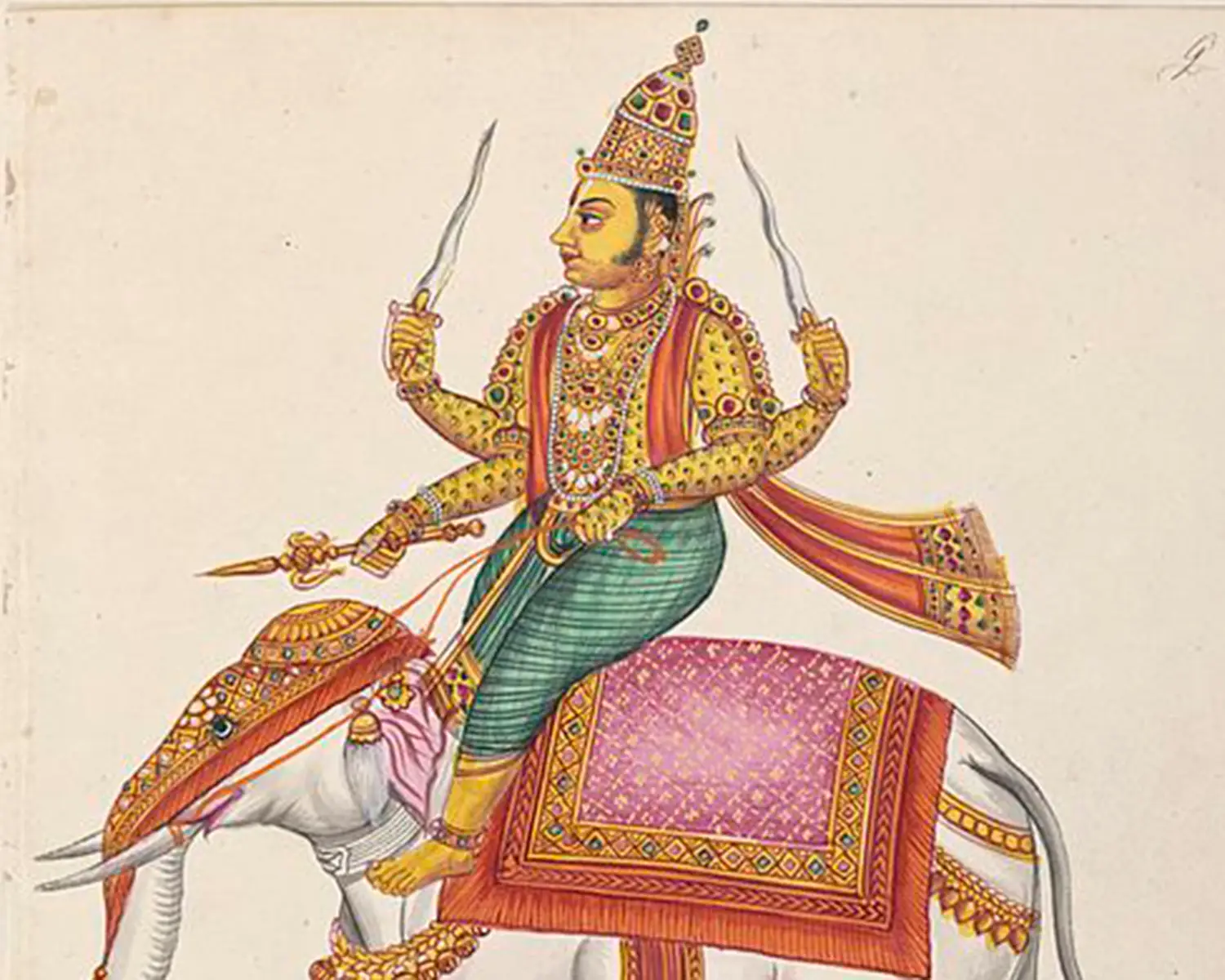
This course explores systems acknowledging the existence of multiple divine beings while focusing worship on a single, supreme entity. Unlike strict Monotheism, which denies the existence of other gods, or Polytheism, which worships many gods, Henotheism occupies a middle ground—a hierarchy of divinity in which one “King” reigns supreme.
Students will trace the supreme deities such as Amun-Ra, Marduk, Zeus, and YHWH to investigate the human tendency to focus devotion on a single point of ultimate power. Why do so many people think this way? What is the source of the need for one supreme God?
Each of our courses are divided into 10 classes corresponding to the 10 chapters of the textbook assigned to the course. Each class has four lessons.Each of our courses are divided into 10 classes corresponding to the 10 chapters of the textbook assigned to the course. Each class has four lessons.

Meet Your AI Tutor: Prof. Dr. Nemo LXON
Your 24/7 Socratic Guide Through the Crucible
The Godhunting Academy does not simply feed you information; we demand that you defend it. To aid you in this rigorous pursuit, you will be guided by Doctor Nemo LXON—a proprietary, highly advanced AI theological tutor.
Programmed with a vast library of classical apologetics, historical data, and philosophical frameworks, Doctor Nemo is not a passive search engine. He is a tireless sparring partner embedded directly into this syllabus, ready to challenge your premises, refine your arguments, and forge you into a Certified Godhunter™.
Henotheism: Finding the Supreme God: The 10-Class Syllabus
Chapter 1: The One and the Many. Understand the core tenet of this worldview: multiple gods exist, but only one is supreme and worshipped. You will examine historical examples, including the fusion of the Egyptian gods into Amun-Ra and the pre-Islamic high god Allah.
Chapter 2: The Reign of the Supreme. Explore the celestial monarchy where the supreme God reigns over others, holding executive power. We analyze Mesopotamian dynamics, observing how city-state patron gods like Marduk and Ashur were elevated to the Head of the Council of gods.
Chapter 3: The Logic of Exclusive Worship. Investigate why a supreme God is exclusively worshipped even when others are believed to exist. You will learn how the celestial elevation of a single god often mirrored the political unification of diverse empires, and how supreme gods absorb the attributes of lesser deities through syncretism.
Chapter 4: The Status of Secondary Gods. Analyze how secondary gods exist but become irrelevant to believers’ devotion. We look at philosophical theism in Greece and Rome, where gods like Zeus or Jupiter were viewed as the “Supreme Mind,” and lesser deities were relegated to mere helpers or distinct names for the One.
Chapter 5: Vedic Religion (Brahmanism) Study Ancient India’s Vedic religion, for which scholar Max Müller specifically coined the term “Henotheism”. We explore “Kathenotheism,” a fluid system where whichever god you are currently praying to—such as Indra, Agni, or Varuna—functions temporarily as the Chief God.
Chapter 6: Early Israelite Religion Examine interpretations of early Israelite religion through the lens of monolatry. You will explore beliefs in YHWH and El, and analyze how the biblical concept of a “jealous God” historically functioned as a demand for exclusive worship against rival, acknowledged deities.
Chapter 7: Religious Development Evaluate if Henotheism serves as a natural evolutionary bridge between primitive Polytheism and philosophical Monotheism. We trace how the consolidation of human empires and intellectual abstraction naturally led to the contraction of ancient pantheons.
Chapter 8: Defining Supremacy Determine what truly makes a God supreme—raw power, the act of creation, or moral authority. We also note the frequent, cross-cultural association of the Supreme God with the Sun (Aten, Sol Invictus, Ahura Mazda) as a symbol of undeniable power.
Chapter 9: Henotheism vs. Monotheism Clarify the fine line between these two systems: Monotheism dictates that only one God exists, whereas Henotheism dictates that only one God matters. We discuss the profound psychological shift required to move from “My God is the strongest” to “My God is the Only”.
Chapter 10: Case Studies and Synthesis Conclude by analyzing how daily life functioned in henotheistic communities, particularly among soldiers and kings. We will also discuss whether Henotheism survives today in modern Hindu Bhakti traditions.
Test Your Investigative Instincts
Here is a sample of some of the class questions that might be used:
1. The Definitional Question: What is the fundamental difference between Monotheism and Henotheism?
(Answer Hint: Monotheism asserts that only one God actually exists, whereas Henotheism acknowledges that multiple gods exist, but dictates that only one is supreme and worthy of worship.)
2. The Anthropological Question: Why did the rise of sprawling human empires often lead to the rise of Henotheism?
(Answer Hint: The elevation of a single “King of Gods” mirrored the political reality of a single human Emperor, providing a way to politically and culturally unify a diverse empire under a single celestial banner.)
3. The Ritual Question: What is the practice of “Kathenotheism” as seen in the ancient Vedic religion?
(Answer Hint: It is a fluid system of supremacy where the specific god a devotee is praying to at that exact moment is treated as the absolute “Chief God,” regardless of the broader pantheon’s hierarchy.)
Why we chose this image
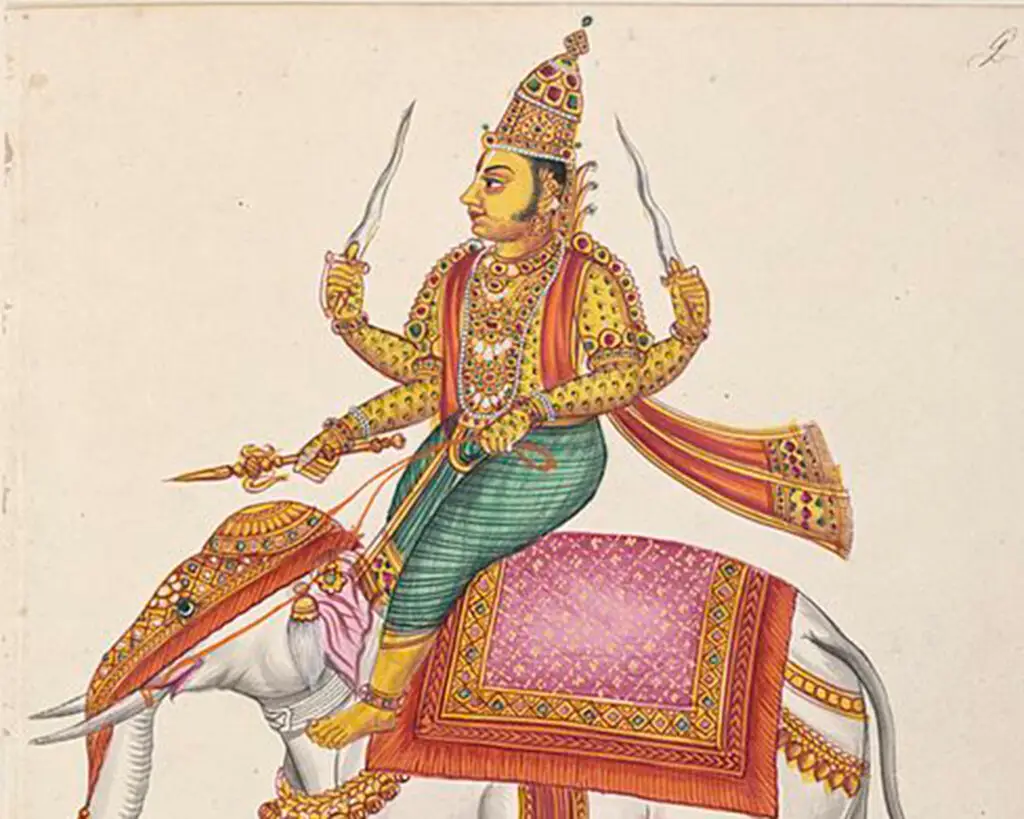
Indra seems to have been a supreme God in India, but was later demoted. Indra was transformed from a worshipped god into a mythological figure who experienced sometimes unflattering adventures, allowing gods such as Vishnu and Shiva to replace him at the head of the Hindu pantheon. Nevertheless, Indra continued to be associated with storms, rain, and the cardinal point East.