Dualism: Two Perpetual Opposing Forces
Course IX of the Certified Godhunter Series
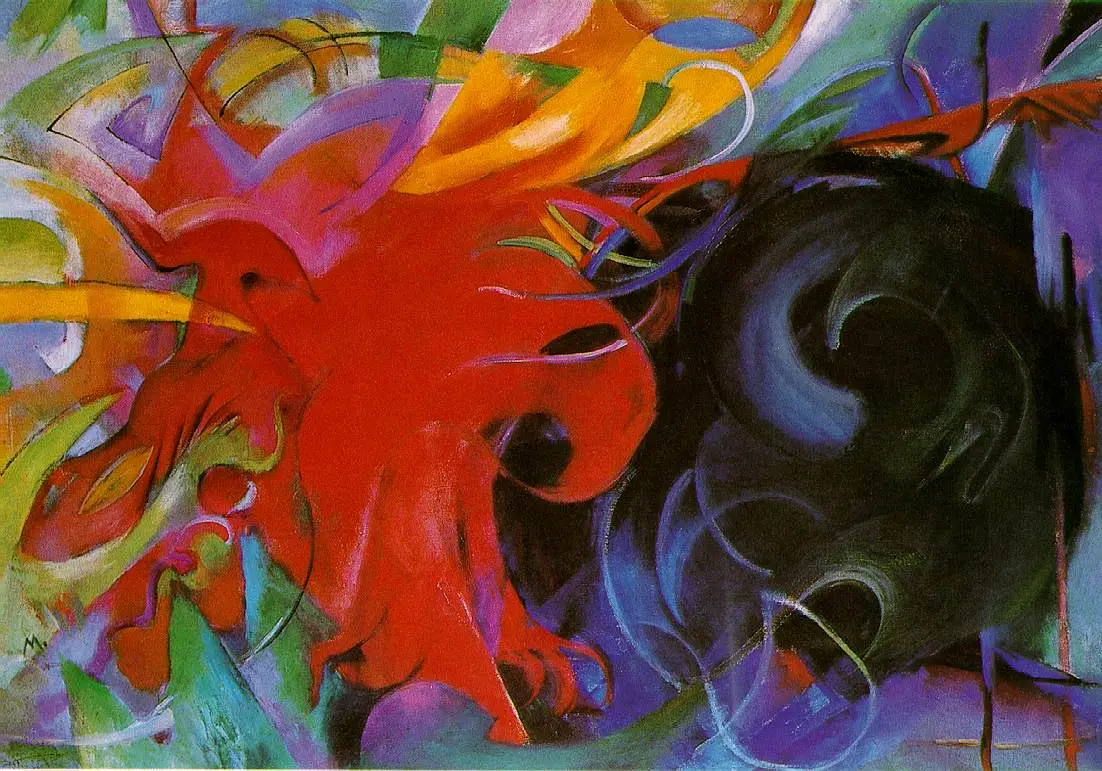
This course examines systems where ultimate reality consists not of a single Creator, but of two coeternal, opposing forces. Students will explore the invisible cosmic conflict through ancient traditions like Zoroastrianism and Manichaeism, alongside Western Cartesian Dualism. By analyzing the perpetual struggle between Light and Darkness, investigators will discover how Dualism uniquely addresses the “Problem of Evil” by absolving the Good force of responsibility for the world’s suffering, requiring humanity to take an active role in the cosmic war.
Each of our courses are divided into 10 classes corresponding to the 10 chapters of the textbook assigned to the course. Each class has four lessons.Each of our courses are divided into 10 classes corresponding to the 10 chapters of the textbook assigned to the course. Each class has four lessons.

Meet Your AI Tutor: Prof. Dr. Nemo LXON
Your 24/7 Socratic Guide Through the Crucible
The Godhunting Academy does not simply feed you information; we demand that you defend it. To aid you in this rigorous pursuit, you will be guided by Doctor Nemo LXON—a proprietary, highly advanced AI theological tutor.
Programmed with a vast library of classical apologetics, historical data, and philosophical frameworks, Doctor Nemo is not a passive search engine. He is a tireless sparring partner embedded directly into this syllabus, ready to challenge your premises, refine your arguments, and forge you into a Certified Godhunter™.
Dualism-two-opposing-forces: The 10-Class Syllabus
Chapter 1: The Fundamental Reality Discover a universe defined not by a “One,” but by a “Two.” You will explore the concept of a binary reality where two forces are coeternal—neither created the other, meaning there is no single “First Cause.”
Chapter 2: The Nature of the Forces Define the combatants in this invisible war. You will learn how these opposing forces are often viewed not as physical beings or personal gods, but as abstract principles and currents that govern existence.
Chapter 3: The Struggling Relationship Analyze the dynamic of the cosmic struggle. In this system, neither force is absolutely omnipotent; each can achieve situational superiority, resulting in a fluctuating tide of battle with no guaranteed victor.
Chapter 4: Ancient Foundations I – Zoroastrianism Survey one of the earliest dualistic religions. We examine the Persian personification of the conflict between Ahura Mazda (Wisdom/Good) and Angra Mainyu (Destruction/Evil) through both Cosmic and Moral Dualism.
Chapter 5: Ancient Foundations II – Manichaeism Study the great Gnostic contender that once rivaled Christianity. You will explore the theology of trapped particles of Light imprisoned by Darkness in the physical world, and the quest for liberation through gnosis (knowledge).
Chapter 6: Modern Applications – Pop Culture Trace dualistic themes into the modern era, analyzing the “Light” and “Dark” sides of the Force in Star Wars. We will contrast this Western conflict model with Eastern complementary dualism (like Yin and Yang).
Chapter 7: The Theodicy of Dualism Tackle the “Problem of Evil.” You will learn how Dualism uniquely absolves the “Good” force from the blame of suffering by attributing the brokenness of the world entirely to a distinct, coeternal Force of Evil.
Chapter 8: The Mechanics of the Universe Examine the cosmos as a mechanism of balance. We explore the “pendulum effect” of history, exploring the paradox that the stability of the universe is maintained by the perpetual tension of this conflict.
Chapter 9: The Human Role Understand the profound ethical implications of a divided universe. In Dualism, neutrality is impossible; you will explore what it means to live with a “soldier’s mindset,” where every moral choice is a tactical maneuver in the war.
Chapter 10: Synthesis Conclude by examining the enduring legacy of Dualism. We trace its influence on Christian concepts of Satan and Hell, the literary theme of the “shadow self,” and the psychological experience of the divided human conscience.
Test Your Investigative Instincts
Study so you can answer these questions from the dualistic viewpoint:
1. The Metaphysical Question: In strict Dualism, what is the origin of the two opposing forces? (Answer Hint: Neither force created the other. They are considered “coeternal,” meaning both have existed forever without a single, unifying “First Cause.”)
2. The Theodicy Question: How does Dualism uniquely solve the “Problem of Evil” compared to traditional Monotheism? (Answer Hint: It posits that a coeternal Evil force is entirely and independently responsible for suffering, meaning the Good force cannot be blamed for the world’s brokenness or tragedy.)
3. The Ethical Question: What does the dualistic framework demand of humanity regarding morality? (Answer Hint: Neutrality is impossible. Humans must actively align with one force or the other, viewing every ethical choice (kindness or cruelty) as an active participation that empowers one side of the cosmic war.)
Why did we use this image for this course?
Fighting Forms is a significant painting created by German artist Franz Marc in 1914, which depicts opposing forces of bright red and darker black. Marc was a founding member of Der Blaue Reiter, an association of German Expressionist artists. He had a distinct artistic style, depicting a love of animals and intense primary and secondary colors with symbolic meanings.
Marc gave emotional meaning to the colors he used in his work. Blue represents masculinity and spirituality, yellow representing feminine joy, and red representing violence. According to art critics, Fighting Forms is one of Marc’s most accomplished works that showcase his inclination towards the opposition between natural vitality (embodied in the animal world) versus civilization (with its strict social codes).
from: https://www.artchive.com/artwork/fighting-forms-1914-by-franz-marc/