Monism and the Unified Reality
Course VIII of the Certified Godhunter Series
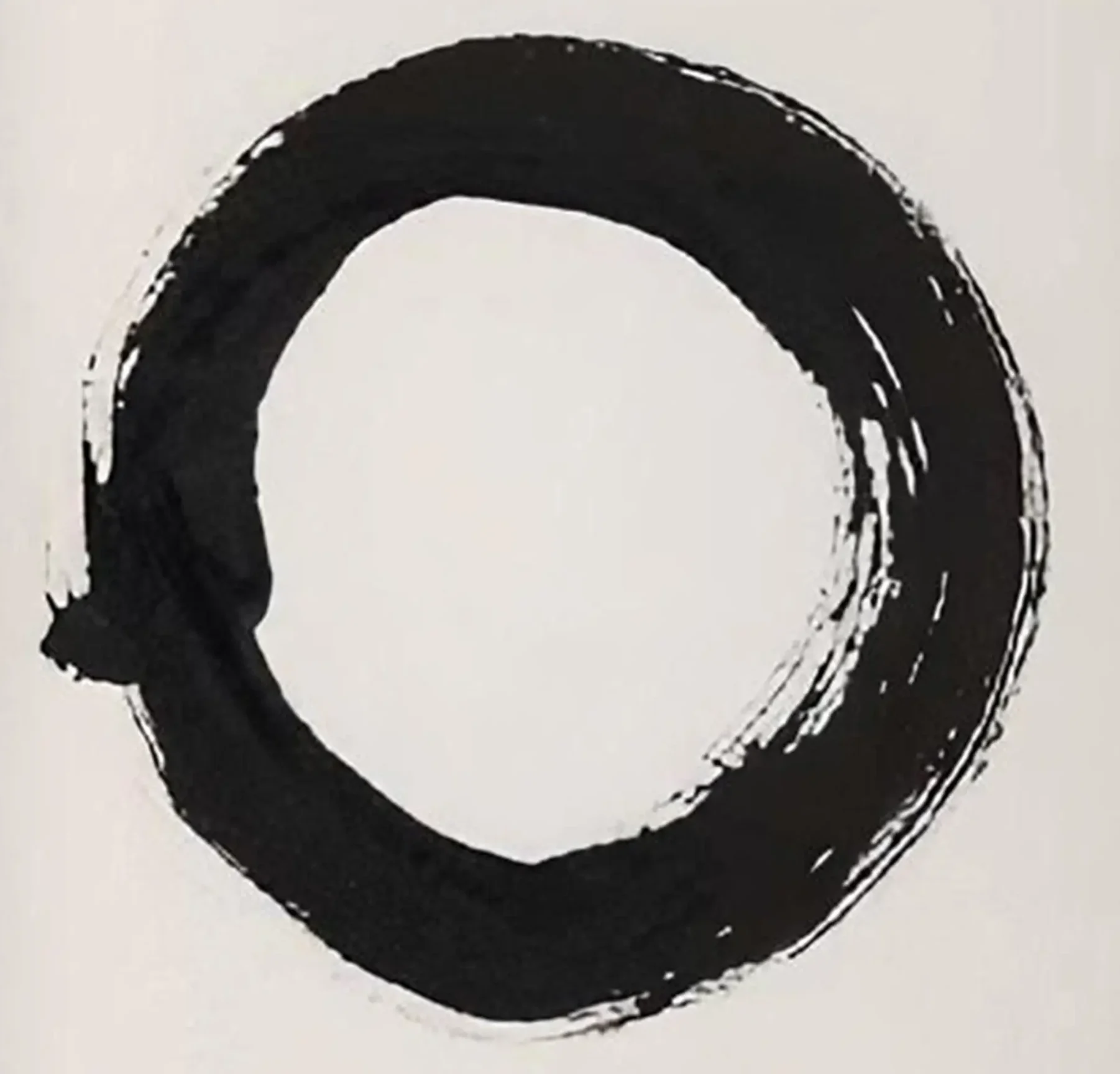
Monism is the view that reality consists of a single substance or principle. Using the analogy of the ocean and the wave, students will investigate how perceived diversity is often viewed as an illusion, with all things lacking independent substance. By integrating Eastern perspectives like Advaita Vedanta and Taoism with Western Neoplatonism, this class challenges the boundaries of dualism and examines the “One Absolute Reality”.
Each of our courses are divided into 10 classes corresponding to the 10 chapters of the textbook assigned to the course. Each class has four lessons.Each of our courses are divided into 10 classes corresponding to the 10 chapters of the textbook assigned to the course. Each class has four lessons.
Meet Your AI Tutor: Prof. Dr. Nemo LXON
Your 24/7 Socratic Guide Through the Crucible
The Godhunting Academy does not simply feed you information; we demand that you defend it. To aid you in this rigorous pursuit, you will be guided by Doctor Nemo LXON—a proprietary, highly advanced AI theological tutor.
Programmed with a vast library of classical apologetics, historical data, and philosophical frameworks, Prof. Dr Nemo is not a passive search engine. He is a tireless sparring partner embedded directly into this syllabus, ready to challenge your premises, refine your arguments, and forge you into a Certified Godhunter™.
Monism and the Unified Reality: The 10-Class Syllabus
Chapter 1: Defining Monism Monism argues for a fundamental unity where there is only one substance or principle in existence, defining the “One Absolute Reality” as the singular ground of all being. It strictly rejects Dualism’s split of mind and matter and Pluralism’s universe of independent substances.
Chapter 2: The Unified One and the Many This chapter tackles the relationship between the One and the Many, arguing that the perception of separate, diverse objects is actually an illusion and a misunderstanding of reality.
Chapter 3: Illusion and Emanation (The Concept of Maya) Introduces the concept of Maya as a cosmic illusion or “veil” that conceals ultimate reality and creates a sense of separation from the underlying oneness.
Chapter 4: The Concept of Brahman. Explore Theological Monism, where the universe is identified with the divine. Study the Upanishadic formula Tat Tvam Asi (“Thou Art That”), which equates the individual soul with the Universal Reality.
Chapter 5: Advaita Vedanta & Taoism. Examine Shankara’s strict non-dualism in Advaita Vedanta, and contrast it with Taoism’s “Complementary Dualism,” where opposites like Yin and Yang are functional partners in the dance of existence.
Chapter 6: Neoplatonism Explore Western Monism through Plotinus, learning how reality emanates from ‘The One’ like light from the sun, and connect this to Baruch Spinoza’s Substance Monism.
Chapter 7: Distinguishing Monism and Pantheism Learn to distinguish Monism from Pantheism by exploring the subtle philosophical differences between the “Identity of Substance” and the “Identity of Nature”.
Chapter 8: Philosophical Implications Critique Western Conflict Dualism by presenting the Monistic argument that opposites are entirely interdependent (e.g., light cannot exist without dark), thereby denying actual plurality.
Chapter 9: The Way to Knowledge Cover the epistemology required to perceive non-dual reality, studying the Zen Buddhist Ensō symbol and the teaching that “Form is emptiness; emptiness is form”.
Chapter 10: The Enduring Influence Integrate Eastern and Western perspectives to find the common thread of the “Perennial Philosophy,” tracing Monism’s enduring influence on modern spirituality.
Test Your Investigative Instincts
Can you answer these questions?
1. The Analogy Question: How does the analogy of the Ocean and the Wave explain the core premise of Monism?
(Answer Hint: Monism realizes that the wave is just a temporary activity of the ocean, having no independent substance of its own; ultimately, there is only water.)
2. The Epistemological Question: In Monistic philosophy, what is the function of “Maya”?
(Answer Hint: Maya acts as a cosmic illusion or “veil” that conceals ultimate reality and creates a false sense of separation from the underlying oneness.)
3. The Dualism Question: How does the “Complementary Dualism” of Taoism differ from Western “Conflict Dualism”?
(Answer Hint: Western dualism sees forces like good and evil as independent substances fighting for space, whereas Taoism posits that opposites like Yin and Yang are interdependent, functional partners within the unity of the Tao.)
Why did we use this image for this course?
The ensō symbolizes absolute enlightenment, strength, elegance, the universe (Dharmadhatu), and mu (emptiness). It is characterised by a minimalism influenced by Zen Buddhist philosophy, and Japanese aesthetics. An empty circle also appears in the ten oxherding pictures which is a set of illustrations that depict Zen training.
Drawing ensō is a disciplined-creative practice of Japanese ink painting, sumi-e. The tools and mechanics of drawing the ensō are the same as those used in traditional Japanese calligraphy: One uses an ink brush to apply ink to washi (a thin Japanese paper).
The circle may be open or closed. In the former case, the circle is incomplete, allowing for movement and development and the perfection of all things. Zen practitioners relate the idea to wabi-sabi, the beauty of imperfection. The space inside the circle may represent the state of the realization of emptiness (shunyata) or no-mind.