Deism: The Clockwork Universe
Course VII of the Certified Godhunter Series
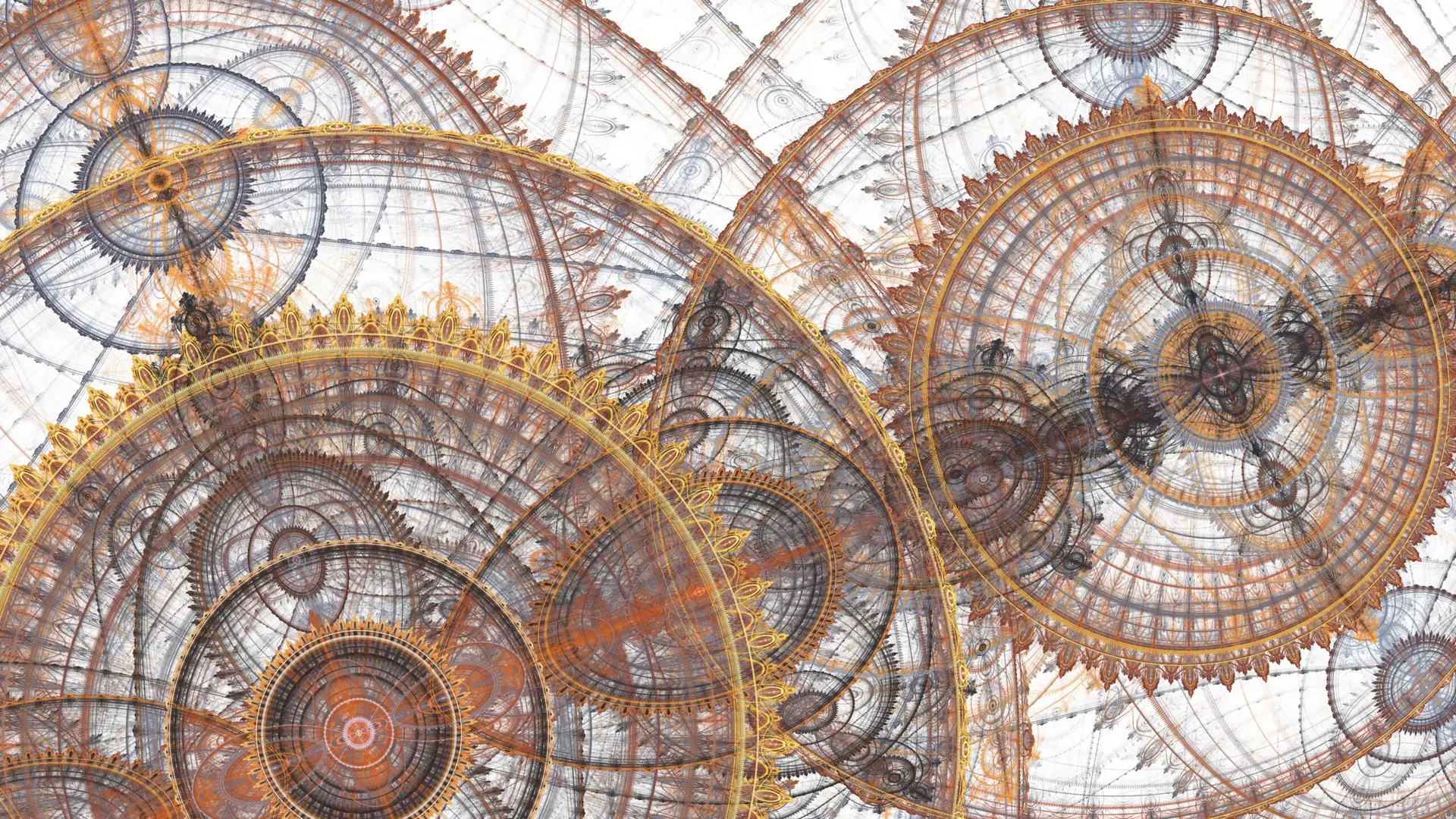
Deism invites the student to examine the universe as a perfect, self-sustaining machine governed by immutable natural laws. Unlike approaches seeking a personal deity, this course explores the Enlightenment view of God as a “Supreme Architect” who constructed the cosmos but does not intervene in its operation. Students will rely on reason over revelation, studying the “Watchmaker” argument and the historical philosophies of Aristotle, Voltaire, and Thomas Paine to understand a God defined by function rather than feeling
Each of our courses are divided into 10 classes corresponding to the 10 chapters of the textbook assigned to the course. Each class has four lessons.Each of our courses are divided into 10 classes corresponding to the 10 chapters of the textbook assigned to the course. Each class has four lessons.

Meet Your AI Tutor: Prof. Dr. Nemo LXON
Your 24/7 Socratic Guide Through the Crucible
The Godhunting Academy does not simply feed you information; we demand that you defend it. To aid you in this rigorous pursuit, you will be guided by Doctor Nemo LXON—a proprietary, highly advanced AI theological tutor.
Programmed with a vast library of classical apologetics, historical data, and philosophical frameworks, Doctor Nemo is not a passive search engine. He is a tireless sparring partner embedded directly into this syllabus, ready to challenge your premises, refine your arguments, and forge you into a Certified Godhunter™.
Deism: The Clockwork Universe: The 10-Class Syllabus
Chapter 1: God is the “Supreme Architect.” Examine the central metaphor of Deism: the “Watchmaker” argument. You will learn how the complexity and order of the universe imply a mechanism that defines God by function (The Grand Geometrician) rather than by human emotion.
Chapter 2: Strict Transcendence Understand the Deist rejection of divine immanence. We explore the concept that God exists entirely apart from the universe; once creation was finished, the Architect stepped back, leaving a self-sustaining system.
Chapter 3: Natural Laws in Motion Investigate the mechanistic worldview that evolved alongside Isaac Newton’s discoveries. You will analyze how fixed universal laws, like gravity, make the universe predictable without the need for spiritual intervention.
Chapter 4: The Doctrine of Non-Intervention Analyze the most controversial tenet of Deism: the rejection of miracles and special revelation. We explore the logic that if God and His laws are perfect, suspending them (a miracle) would be an admission of a design failure.
Chapter 5: Aristotle’s “Prime Mover” Trace the philosophical roots of Deism back to ancient Greece. We study Aristotle’s argument for the “Unmoved Mover”—an impersonal source of reality that causes all motion but does not relationally “love” the world.
Chapter 6: The Influence of Voltaire Study the French Enlightenment writer who defended the existence of a Supreme Being against atheism while attacking the superstition of organized religion. We examine his argument for a “social religion” necessary for public order.
Chapter 7: The Influence of Thomas Paine Explore how this American founding father took Deism to the masses. We analyze his book, The Age of Reason, and his argument that the “Bible of Creation” is the only universal, unforgable word of God.
Chapter 8: Deism versus the Religious Establishment Investigate the direct conflict between Deism and “Revealed Religions.” We explore Deism’s critique of priestcraft, mysteries like the Trinity, and the doctrine of Original Sin, relying instead on universal human reason.
Chapter 9: The Absence of a Personal God Wrestle with the implications of a Watchmaker who walked away. We explore a reality where there is no prayer, no divine relationship, and no micromanagement, granting humanity total freedom within a rational universe.
Chapter 10: Deism’s Legacy Today Conclude by examining how Deism serves as the invisible operating system for the modern West. We trace its influence on modern secularism and the foundational scientific belief in a predictable, law-abiding cosmos.
Test Your Investigative Instincts
Before you commit to studying Deism, test your current reasoning against the Academy’s curriculum.
1. The Metaphor Question: In the “Watchmaker Argument,” what is the core philosophical implication of comparing the universe to a watch rather than a stone? (Answer Hint: Finding a stone implies natural causes, but finding a complex, perfectly ordered machine like a watch logically implies the existence of an intelligent designer or mechanic.)
2. The Miracle Question: Why does the theology of Deism strictly reject the concept of miracles? (Answer Hint: Deism argues that God is perfect and created perfect natural laws. Therefore, a miracle—which is a suspension or violation of those laws—would imply that the original creation was flawed and needed fixing.)
3. The Revelation Question: According to Thomas Paine and Deist philosophy, why is the physical universe superior to a written text (like the Bible) as a source of divine revelation? (Answer Hint: Human language changes over time and written texts can be altered or forged by humans, whereas the physical laws and structures of nature are universal, unchanging, and cannot be forged.)