Atheism and Agnosticism: The Nonexistent and Unprovable
Course VI of the Certified Godhunter Series

This course investigates non-theistic frameworks, focusing on the belief that God does not exist or cannot be known. Students will analyze the core definitions separating Atheism from Agnosticism and study philosophical giants like Friedrich Nietzsche and Karl Marx. We will also explore the modern “New Atheism” movement, the psychological critiques of Sigmund Freud, and the epistemological demands of the burden of proof, surveying the perspectives of leading scientists and thinkers.
Each of our courses is divided into 10 classes, corresponding to the 10 chapters of the assigned textbook. Each class has four lessons. Each of our courses is divided into 10 classes, corresponding to the 10 chapters of the assigned textbook. Each class has four lessons.
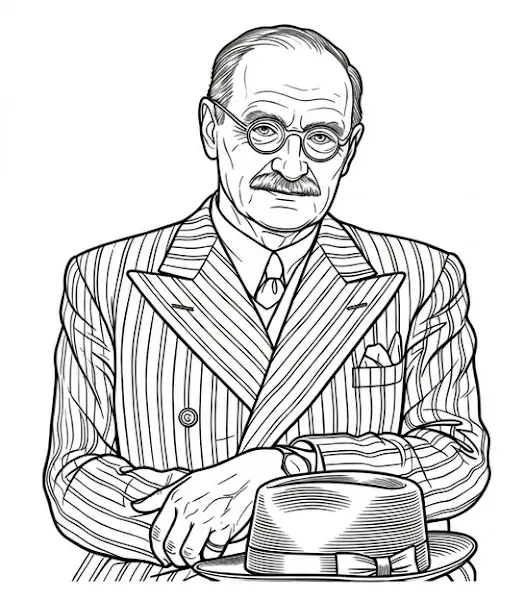
Meet Your AI Tutor: Prof. Dr. Nemo LXON
Your 24/7 Socratic Guide Through the Crucible
The Godhunting Academy does not simply feed you information; we demand that you defend it. To aid you in this rigorous pursuit, you will be guided by Doctor Nemo LXON—a proprietary, highly advanced AI theological tutor.
Programmed with a vast library of classical apologetics, historical data, and philosophical frameworks, Doctor Nemo is not a passive search engine. He is a tireless sparring partner embedded directly into this syllabus, ready to challenge your premises, refine your arguments, and forge you into a Certified Godhunter™.
Atheism and Agnosticism: The 10-Class Syllabus
Chapter 1: Core Definitions Establish the foundational boundary lines. We will clearly define Atheism (the belief that there is no God) and Agnosticism (the belief that God’s existence is unprovable or currently unknown).
Chapter 2: Relationship Status Examine the implications of a universe with no divine relationship. We explore what it means to live in a reality where humanity is entirely on its own, and the concept of God is treated as either nonexistent or fundamentally unprovable.
Chapter 3: Atheism I: Philosophical Proponents Investigate the historical and philosophical foundations of modern atheism by studying the influential arguments of 19th-century thinkers like Friedrich Nietzsche and Karl Marx.
Chapter 4: Atheism II: New Atheism Analyze the modern, more aggressive critique of religion known as “New Atheism,” spearheaded by prominent public intellectuals like Richard Dawkins and Christopher Hitchens.
Chapter 5: Agnosticism I: Proponents Trace the formalization of Agnosticism as a distinct intellectual position, examining the works and arguments of Thomas Henry Huxley (who coined the term) and philosopher Bertrand Russell.
Chapter 6: Agnosticism II: Scientists of the Cosmos Review the cosmic perspectives of prominent science communicators like Carl Sagan and Neil deGrasse Tyson, who often frame the universe through a lens of scientific wonder rather than theism.
Chapter 7: Scientists and Belief Explore the highly nuanced, often debated views on God, nature, and design held by paradigm-shifting scientists like Charles Darwin and Albert Einstein.
Chapter 8: The Psychology of Belief Investigate Sigmund Freud’s view on belief, treating the concept of God not as a reflection of objective reality, but as a psychological mechanism or illusion created by human needs.
Chapter 9: The Burden of Proof Navigate the epistemological demands of Agnosticism. We will analyze the rules of debate regarding who holds the responsibility of proof when discussing the existence or non-existence of a deity.
Chapter 10: Synthesis Conclude by assessing the role of Non-Theism in defining modern reality. We will synthesize how these philosophies impact contemporary ethics, culture, and humanity’s understanding of its place in the universe.
Test Your Investigative Instincts
Before you commit to the study of atheism and agnosticism consider these questions:
1. The Definitional Question: What is the primary epistemological distinction between Atheism and Agnosticism?
(Answer Hint: Atheism makes a definitive claim that there is no God, whereas Agnosticism asserts that the existence of God is ultimately unprovable or currently beyond human knowledge.)
2. The Psychological Question: How did Sigmund Freud view the origins of religious belief?
(Answer Hint: Freud viewed belief in God not as a reality, but as a psychological coping mechanism or projection derived from a human desire for a protective father figure.)
3. The Epistemological Question: In the context of Agnosticism, what is meant by “The Burden of Proof”?
(Answer Hint: It refers to the epistemological demand that the party making the positive claim—that God exists—must provide the evidence, rather than the skeptic having to prove a negative.)
Why did we use this image for this course?
If this life is all there is, what is our purpose? We know time is running out and death in certain. The only logical answer is to enjoy the best things of life and do things that make us feel good about ourselves. This art attempts display those thoughts.