Foundations of Classical Theism
Course II in the Certified Godhunter Series
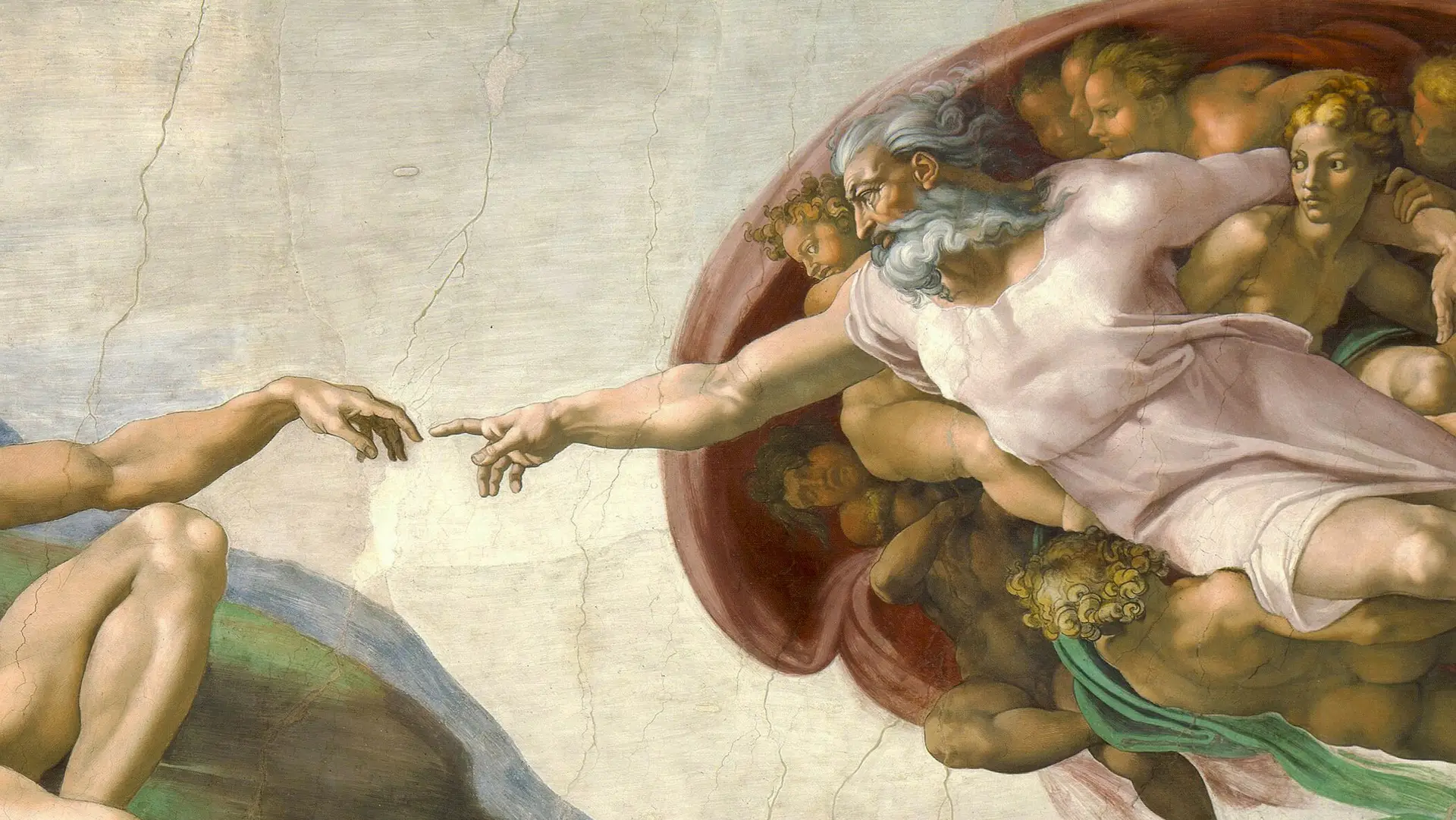
This course explores the concept of God as the ultimate, perfect, personal creator, a framework central to many Abrahamic faiths. As textbook two in the certified God hunter series, this curriculum demands that students move beyond vague spiritual concepts and rigorously define the nature of the Deity they are seeking.
Students will dissect the traditional attributes of God—from infinite power to pervasive presence—and weigh these classical views against competing philosophical systems. By examining historical contexts and addressing modern challenges to these ancient frameworks, investigators will build a robust, intellectually defensible understanding of Classical Theism.
Each of our courses are divided into 10 classes corresponding to the 10 chapters of the textbook assigned to the course. Each class has four lessons.Each of our courses are divided into 10 classes corresponding to the 10 chapters of the textbook assigned to the course. Each class has four lessons.
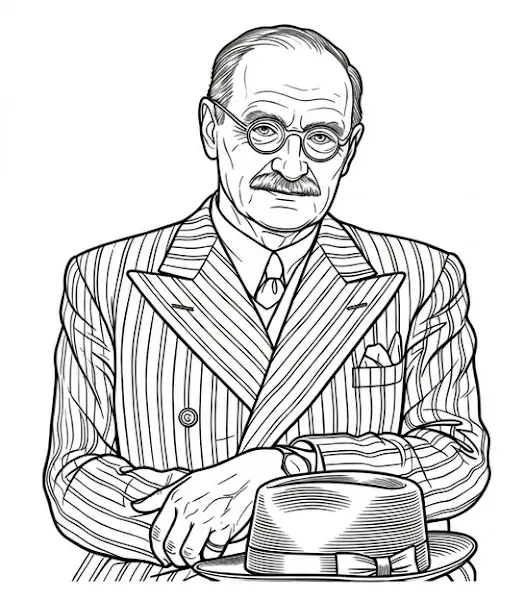
Meet Your AI Tutor: Prof. Dr. Nemo LXON
Your 24/7 Socratic Guide Through the Crucible
The Godhunting Academy does not simply feed you information; we demand that you defend it. To aid you in this rigorous pursuit, you will be guided by Doctor Nemo LXON—a proprietary, highly advanced AI theological tutor.
Programmed with a vast library of classical apologetics, historical data, and philosophical frameworks, Doctor Nemo is not a passive search engine. He is a tireless sparring partner embedded directly into this syllabus, ready to challenge your premises, refine your arguments, and forge you into a Certified Godhunter™.
Foundations of Classical Theism: The 10-Class Syllabus
Chapter 1: The Core Framework. We begin by examining God as the ultimate, perfect, personal creator. This sets the foundational baseline for the entire course.
Chapter 2: Omniscience and Omnipotence. Exploring the attributes of being all-knowing and all-powerful. We will also introduce a critique of these attributes in Process Theism, which will be covered in depth in a later class.
Chapter 3: Immutability and Omnipresence. Examining God’s unchanging nature and pervasive presence. We will analyze the stark contrast with the evolving nature of God in Process Theism.
Chapter 4: Transcendence and Immanence. Understanding how God is both distinct from the universe and actively involved in it. This dual nature requires careful comparison to the strictly transcendent nature of Deism.
Chapter 5: Divine Intervention. We investigate the mechanics of a personal God, specifically the role of prayer, miracles, and revelation in creation. This highlights the crucial distinction from the Deistic refusal of intervention.
Chapter 6: Historical Context I (Judeo-Christianity). An analysis of the historical development and specific Theism of Judaism and Christianity.
Chapter 7: Historical Context II (Islam). An examination of the Theism of Islam, mapping its classical attributes against the broader Abrahamic tradition.
Chapter 8: Historical Context III (Eastern Theism). Expanding the geographical scope to study the Theism of Vishishtadvaita Vedanta (Ramanuja) to see how classical attributes manifest outside the West.
Chapter 9: Challenges to Classical Theism. No theological framework is immune to scrutiny. We address the coexistence of classical attributes and reality, testing the coherence of the model.
Chapter 10: Classical Theism in Today’s Society. A culminating look at how these ancient definitions function, adapt, and survive in the modern world.
Test Your Investigative Instincts
Test Your Investigative Instincts
Before you commit to the hunt, test your current reasoning against the Academy’s curriculum on Classical Theism.
1. The Methodological Question: How does the Classical Apologetic approach differ fundamentally from the Evidential approach in its very first step? (Answer Hint: Classical apologetics argues that you must first use deductive logic and philosophy—such as the Cosmological Argument—to prove that a Theistic God exists before you can even begin examining historical evidence or miracles.)
2. The Cosmological Question: When deducing the profile of the “First Cause” or “Prime Mover,” why must the Creator be strictly immaterial and timeless? (Answer Hint: Since the First Cause brought all physical matter and time into existence from nothing, the Cause itself cannot be made of matter and must exist entirely outside the boundaries of time.)
3. The Divine Nature Question: In Classical Theism, what does it mean to say that God is “simple” (without parts), and how does this correct the Anthropomorphic bias? (Answer Hint: Divine simplicity means God is an undivided, infinite being rather than a physical composite. This corrects the human bias of projecting physical limitations, such as a body or fluctuating emotions, onto the divine.)
Why did we use this image for this course?
Michelangelo’s The Creation of Adam (c. 1508–1512) is a landmark Renaissance fresco on the Sistine Chapel ceiling in the Vatican, depicting God breathing life into Adam. The iconic, near-touching hands symbolize the divine spark of life and intellect transferred to humanity. This masterpiece exemplifies Renaissance humanist ideals, portraying Adam as a physically perfected figure.