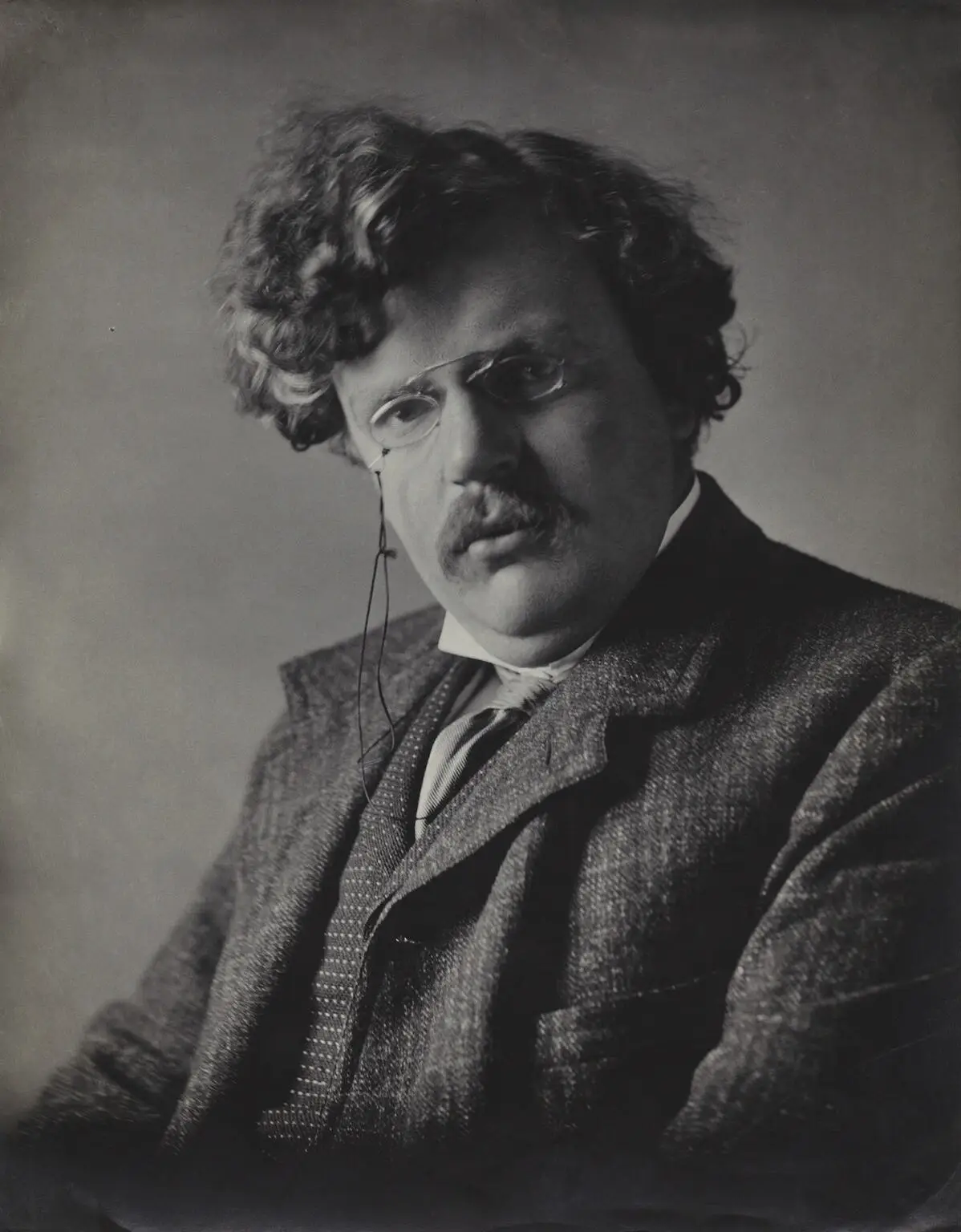
The Everlasting Man G.K. Chesterton,1925
Author: G.K. Chesterton
Year: 1925
Historical Significance: “The Everlasting Man” was written as a direct rebuttal to H.G. Wells’ The Outline of History, which presented a purely secular, evolutionary view of humanity. Chesterton’s work is highly regarded for its “double-vision” approach:
The First Part (On the Creature Called Man): Chesterton argues that man is fundamentally distinct from the animal kingdom—not merely a more complex ape, but a “strange exception” in nature.
The Second Part (On the Strange Story of the Evangel): He argues that Christianity is fundamentally distinct from other religions and mythologies. He posits that Christ is not just another moral teacher, but a unique historical intervention that “broke” the cyclical nature of pagan despair.
Author Background: Gilbert Keith Chesterton (1874–1936) was a prolific English writer, philosopher, and lay theologian. Known as the “Prince of Paradox,” he used wit and literary flair to defend traditional Christianity against the rising tides of modernism, materialism, and scientism. His influence is immense; most notably, C.S. Lewis famously remarked that “The Everlasting Man” played a pivotal role in his conversion from atheism to Christianity, as it provided a coherent historical framework for the faith.