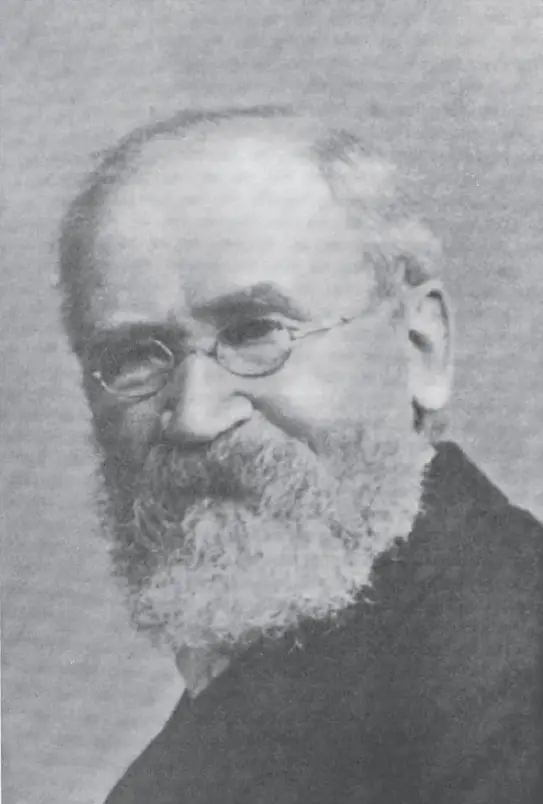
Fairbairn, A. M. (1902). The Philosophy of the Christian Religion. New York: The Macmillan Company; London: Hodder and Stoughton.
Andrew Martin Fairbairn’s The Philosophy of the Christian Religion (1902) is a massive, ambitious attempt to justify Christianity not merely as a matter of faith, but as a logical necessity for understanding the universe.
Fairbairn, a giant of Congregationalist scholarship, argues that if the universe is rational, then the most “rational” point in history—the Person of Christ—must be the key to interpreting it.
- The Core Thesis: Christ as the Pivot of History
Fairbairn’s central argument is that Christianity is the “absolute religion” because it perfectly synthesizes philosophy (the ideal) and history (the real).
- He argues that while other religions have ideas and other histories have great men, only Christianity centers on a figure who is simultaneously a historical individual and a universal metaphysical principle (the Logos).
- For Fairbairn, the Incarnation is the “intellectual necessity” that makes the world intelligible.
- Part I: Religion in General
Before diving into theology, Fairbairn explores the nature of religion across humanity.
- The Evolution of Religion: He views religion as a natural development of human reason. He critiques the idea that religion is born of fear or “primitive” error.
- Ethics and Religion: He asserts that religion is the only force capable of providing a solid foundation for morality. Without a divine “Ideal,” morality becomes mere social convenience.
- Part II: The Person of Christ
This is the heart of the book. Fairbairn moves from the “Jesus of History” to the “Christ of Faith.”
- Beyond Biography: He argues that a purely historical biography of Jesus (like those popular in the 19th century) fails to explain the impact of Christianity.
- The Interpretation of God: He contends that we do not know what “God” means until we look at Christ. Christ “ethicalized” the concept of the Divine, moving it from a distant First Cause to a Father.
- The Interpretation of Man: By becoming human, Christ revealed the potential and dignity of all humanity.
- The Transcendence of Christianity
Fairbairn distinguishes Christianity from “ethnic” religions (like Hinduism or Greek Polytheism).
- Universality: Ethnic religions are tied to specific nations or cultures. Christianity, by focusing on the Person of Christ rather than a specific law or tribe, becomes a “Missionary” religion capable of being the religion of the world.
- The Problem of Evil: He addresses the “philosophy of suffering,” arguing that the Cross shows God participating in human struggle, which provides a more satisfying answer to pain than any abstract philosophy.
- Summary of Key Themes
Theme | Fairbairn’s Position |
Reason vs. Faith | They are partners; a true religion must satisfy the highest intellectual standards. |
The Logos | The “Reason” of God made manifest in the historical person of Jesus. |
History | History is not random; it is a moral process moving toward a goal (Teleology). |
The Church | The community that carries the “Idea” of Christ into the practical world. |
Fairbairn’s work was a response to the growing secularism and “Higher Criticism” of his time. He wanted to prove that you didn’t have to choose between being a rigorous thinker and a devout Christian. To him, Christianity is the highest form of philosophy because it turns abstract truths into a living person.